

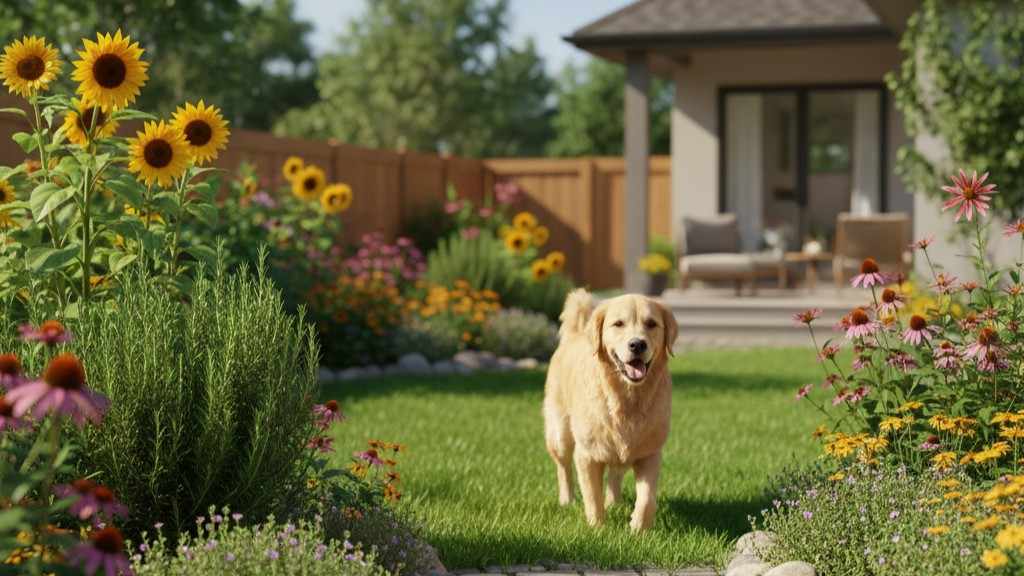
Your backyard should be a place where your pets can run, explore, and relax without you having to worry. But for many pet owners, the standard backyard is full of hidden hazards—toxic plants, escape routes, and surfaces that get dangerously hot in summer.
Choose Pet-Safe Plants and Landscaping Materials
Whether plants are toxic in your yard are one of the first things to audit. Many common garden varieties—including azaleas, foxglove, and sago palms—are toxic to dogs and cats. Even mild exposure can cause vomiting, lethargy, or worse.
Swap out any risky plants for pet-safe alternatives. Sunflowers, snapdragons, and rosemary are all non-toxic and easy to grow. If you have cats, consider adding catnip or cat grass to a corner of your garden—they’ll thank you for it.
What About Mulch and Ground Cover?
Landscaping materials deserve just as much attention as the plants themselves. Cocoa mulch, for example, contains theobromine—the same compound found in chocolate—and can be toxic to dogs if ingested. Opt for cedar or pine mulch instead, which are generally considered safer options.
For ground cover, avoid gravel with sharp edges that can cut paw pads. Smooth river rocks, artificial turf, or soft wood chips are all more comfortable choices. If you use pesticides or fertilizers, look for pet-safe formulations and always follow label instructions about when it’s safe for animals to re-enter the area.
Build Essential Safety Features
Making backyard a safe haven for pets starts with one non-negotiable: containment. No matter how well-trained your dog is, a secure perimeter is essential. Not just to keep your pet in, but to keep other animals out.
Fencing That Actually Works
When it comes to fencing, height and material both matter. Most dogs can’t clear a six-foot fence, but athletic breeds may need something taller. Check the base of your fence line regularly—diggers can create escape routes quickly. If you have a dog that tends to tunnel, consider burying a portion of the fence underground or laying a concrete footer along the perimeter.
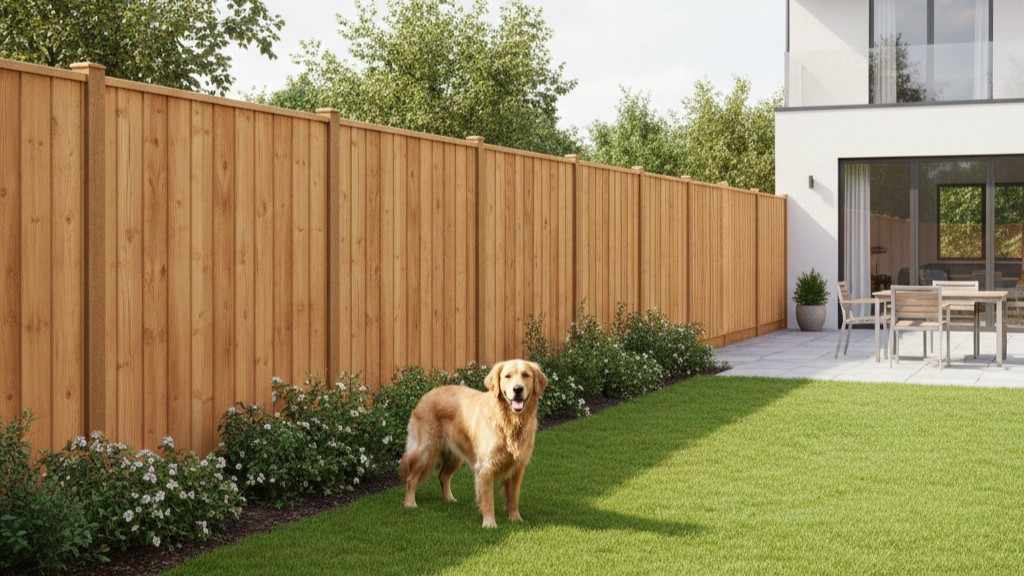
Working with a reputable fence company in Salt Lake City can help you choose the right solution for your yard’s specific layout and your pet’s breed and behavior. A professional assessment can also identify weak points you might miss on your own.
Designated Dig Zones
Rather than fighting your dog’s instinct to dig, give them an approved spot for it. A designated dig zone—essentially a sandbox or a patch of loose soil in a corner of the yard—redirects that energy somewhere harmless. Bury a few toys to encourage them to use them, and they’ll quickly learn where digging is allowed.
For cats that venture outdoors, consider a “catio” or a fully enclosed garden section that lets them enjoy fresh air without the risk of wandering onto the road.
Create Comfort With Shade, Water, and Cooling Features
Heat is a genuine danger for outdoor pets. Dogs and cats can overheat quickly, especially on warm days, and concrete or paving stone surfaces can reach temperatures that burn paw pads within minutes.
Shade Structures and Cool Surfaces
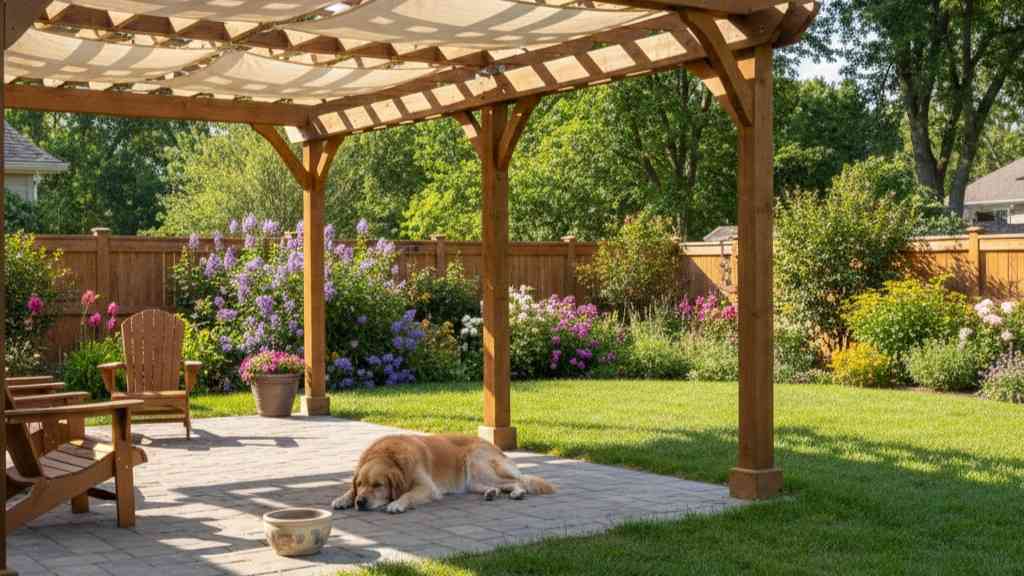
Shade is essential. If your yard doesn’t have natural tree cover, install a sail shade, pergola, or canopy over a pet resting area. Make sure there’s always a shaded spot your pet can access without having to squeeze under a deck or squeeze into a tight corner.
On the surface level, swap dark-colored pavers for lighter materials that don’t absorb as much heat. Natural grass stays significantly cooler than concrete on a hot day—another reason to keep at least a patch of lawn intact.
Hydration Stations
Fresh water should always be available outside. A standard bowl works, but it needs to be refilled frequently and cleaned regularly to prevent algae blooms and bacteria. A better option is an outdoor pet water fountain, which keeps water circulating and cooler for longer.
For dogs that love to cool off more actively, a shallow splash pool or a pet-friendly sprinkler system can make summer afternoons much more comfortable—and a lot more fun.
Add Enrichment With Agility Paths and Sensory Gardens
A safe backyard is important, but an engaging one is even better. Pets that have mental and physical stimulation outdoors are less likely to develop destructive behaviors inside the house.
Agility and Movement Features
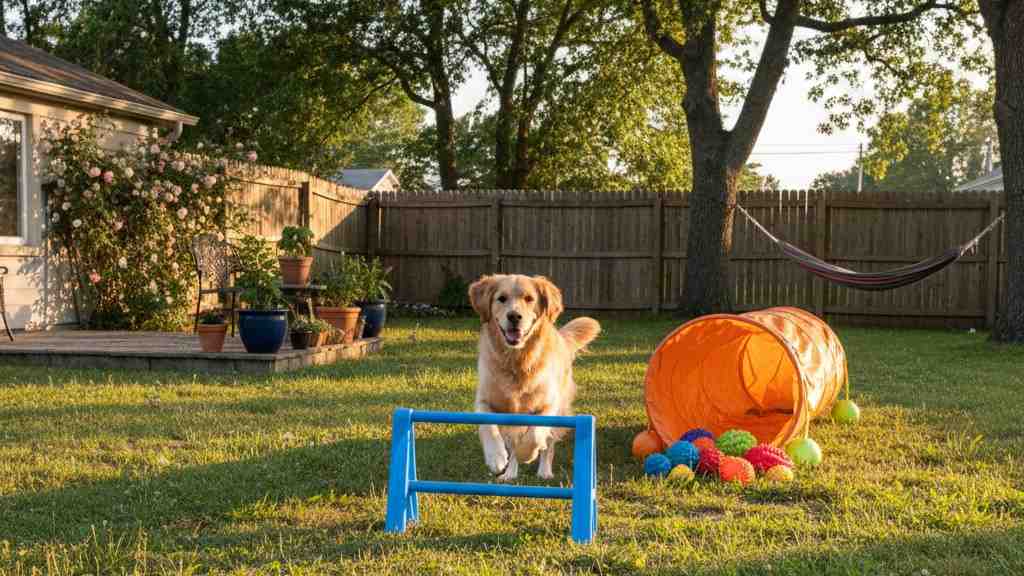
You don’t need a professional agility course to keep your dog active. A few simple additions go a long way. Try setting up:
- Weave poles made from PVC pipe
- Low hurdles built from wooden dowels and bricks
- A tunnel for dogs that love to charge through small spaces
- Raised platforms for dogs that enjoy climbing and surveying their surroundings
Rotate the layout occasionally to keep things fresh. Dogs are quick learners, and once they’ve mastered a course, the challenge—and the fun—can fade.
Sensory Gardens for Dogs and Cats
Pets experience the world through smell and texture more than we do. A sensory garden taps into that. Plant a mix of herbs like lavender, mint, and chamomile to create an aromatic area that dogs and cats will gravitate toward naturally.
For cats, tall ornamental grasses offer both a hiding spot and a tactile experience. For dogs, varying the textures underfoot—gravel, grass, bark, sand—creates a richer sensory experience during their usual patrol of the yard.
Bird feeders and small water features can also add visual stimulation, giving outdoor cats a safe way to watch wildlife without being able to hunt it.
Conclusion
Maintaining a pet-friendly backyard that is a safe haven takes ongoing care. In spring, check fences and replant toxic plants. In summer, refresh water and monitor pavement heat. Fall means clearing toxic leaves and mushrooms, while in winter, rinse paws after exposure to salt or antifreeze. Regular yard checks help prevent hazards and transform your home’s exterior. Think like your pet to spot risks. Safety starts with intention!