

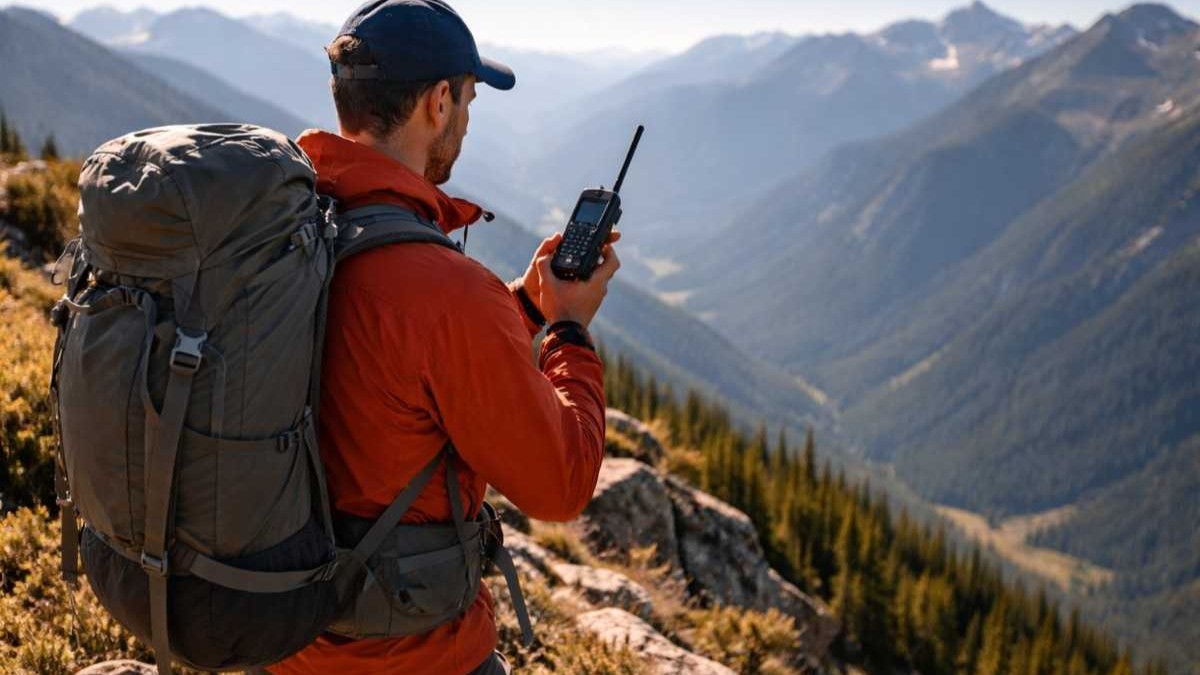
Instant connectivity relies on a vast network of cellular towers. However, these towers require a line-of-sight to function, making them impractical in remote areas like forests, deserts, or the open ocean. As a result, cellular signals quickly disappear when you venture into these rugged terrains.
Understanding Satellite-Based Communication Systems
Cellular networks use terrestrial towers to relay data. Satellite communication takes that infrastructure and puts it into space. Instead of a phone pinging a mast on a nearby hill, a satellite device transmits a signal straight up through the atmosphere.
These systems typically rely on networks of satellites in Low Earth Orbit (LEO) or Geostationary Orbit (GEO). LEO satellites sit roughly 300 to 1,200 miles above the planet, moving rapidly across the sky. Because they are relatively close to Earth, they offer lower latency, meaning there is less delay when sending a message.
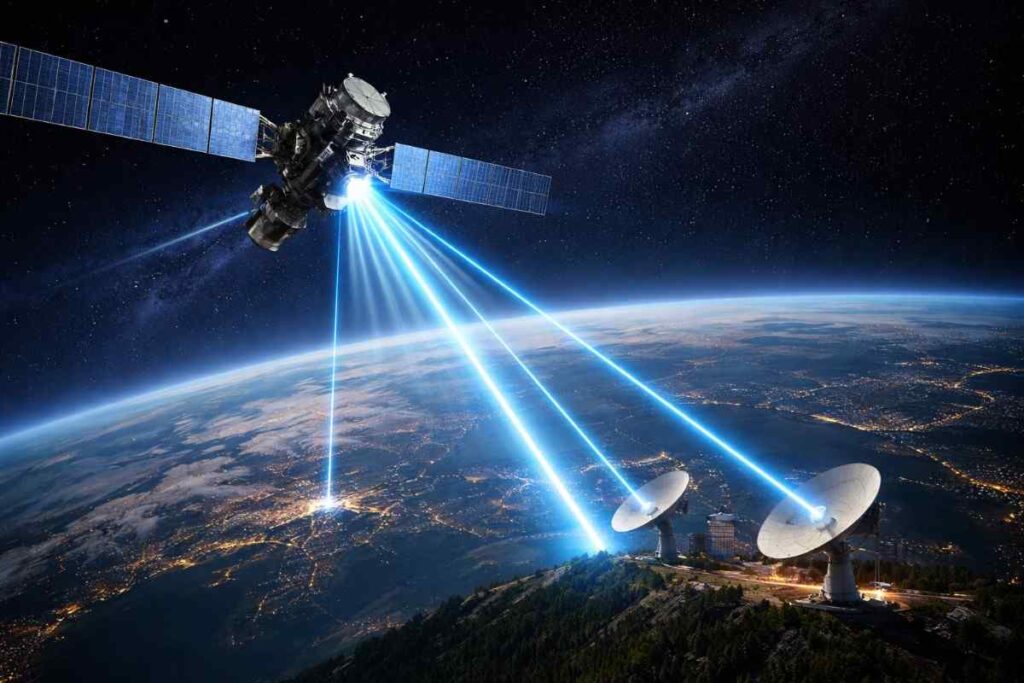
GEO satellites operate much higher, sitting around 22,000 miles above the equator. They remain fixed over one specific location, providing massive coverage areas but with a noticeable delay in signal transmission.
When you send a message from a satellite device, the signal travels up to the nearest satellite. That satellite then beams the data back down to a terrestrial ground station, which routes your message through standard internet or telephone networks to its final destination.
Bridging the Gap in Dead Zones
Standard cell phones simply lack the antenna power to reach space. To communicate without cell towers, you need specialized hardware designed to transmit on specific frequencies. Satellite two-way radio technology provides a critical lifeline in these scenarios, operating much like a traditional walkie-talkie but with a virtually unlimited range.
Because these devices bypass ground-based obstacles entirely, they can function almost anywhere on the planet. The only strict requirement is a relatively clear view of the sky. Thick tree canopies, deep narrow canyons, or being inside a building can obstruct the signal.
When you have an open view, these devices securely bounce your communications across the globe, ensuring you can call for help, coordinate logistics, or simply check in with family.
Comparing Satellite, Mesh Networking, and HF Radio
While satellites are highly effective, they are not the only way to communicate off the grid. Different environments and operational needs call for different types of technology.
Satellite Communication
Satellite systems offer the widest coverage area, often spanning the entire globe. They are highly reliable for sending SOS alerts, text messages, and even making voice calls from remote locations. The primary downside is the cost. The hardware can be expensive, and users must pay monthly or annual subscription fees to access the satellite network.
Mesh Networking
Mesh networks take a completely different approach. Instead of relying on centralized infrastructure like a tower or a satellite, mesh devices talk directly to one another. Each device acts as a node. If you send a message to a team member a mile away, the signal might bounce through two other team members’ devices to reach its destination.
This creates a localized, self-sustaining network. Mesh networking is highly affordable because there are no subscription fees. However, the range is strictly limited by the distance between users and the surrounding terrain.
High-Frequency (HF) Radio
High-frequency radio waves possess a unique physical property: they can bounce off the Earth’s ionosphere. This allows HF signals to travel over the horizon, bouncing between the atmosphere and the ground to reach receivers thousands of miles away.
HF radio requires no infrastructure or subscription fees. It is heavily used by maritime vessels and amateur radio operators. The trade-off is complexity. HF communication requires large antennas, significant power, and technical knowledge of how weather and solar activity affect radio propagation.
Key Benefits for Remote Users
Off-grid communication systems are not just novelty gadgets. They serve as essential safety tools for a wide variety of users operating in extreme environments.
Search and rescue teams rely on these systems to coordinate complex operations. When a hiker goes missing in a deep wilderness area, rescue crews cannot rely on standard cell service to communicate with command centers or helicopter pilots. Satellite and radio networks allow them to share real-time GPS coordinates and request medical evacuations instantly.
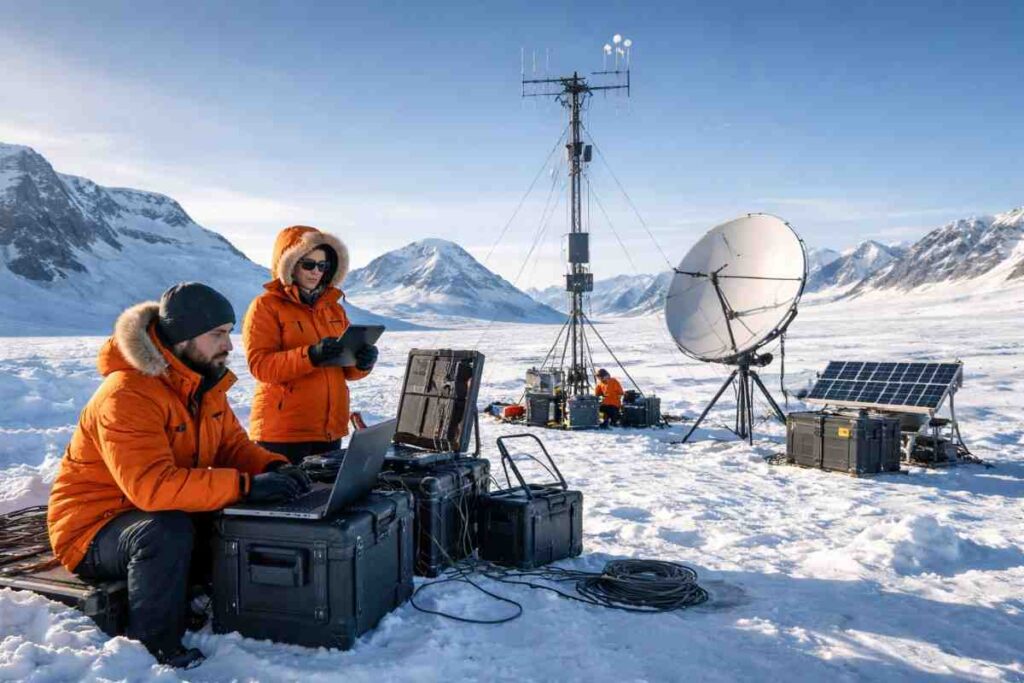
Remote research teams also depend heavily on non-cellular networks. Scientists working in Antarctica, the Amazon rainforest, or on deep-sea research vessels use satellite internet and radio systems to transmit data back to their universities. This constant stream of information allows them to monitor climate patterns, geological activity, and wildlife without waiting months to return to civilization.
For outdoor enthusiasts, these tools provide peace of mind. Backpackers, mountaineers, and sailors carry compact off-grid devices to pull down weather forecasts and send simple check-in messages to their families. If an emergency occurs, a single button press can alert global response centers to their exact location.
Future Trends in Non-Cellular Communication

The boundary between cellular and satellite communication is rapidly blurring. Technology companies are currently developing direct-to-cell satellite networks. In the near future, standard smartphones will be able to connect directly to LEO satellites without needing a specialized bulky antenna or a separate device. Virtual data room access will also expand globally.
We are already seeing the early stages of this technology, with major smartphone manufacturers building basic satellite SOS capabilities into their flagship devices. As satellite constellations grow larger and hardware becomes more sophisticated, we will likely see a shift toward ubiquitous global connectivity.
The concept of a “dead zone” may eventually become a thing of the past, allowing standard consumer devices to transition seamlessly between terrestrial towers and orbiting satellites.
Conclusion
Now that we have explored the basics of satellite technology, it’s clear that this field has endless possibilities for innovation and development. From communication and navigation to earth observation and weather forecasting, satellites play a crucial role in our modern world.