

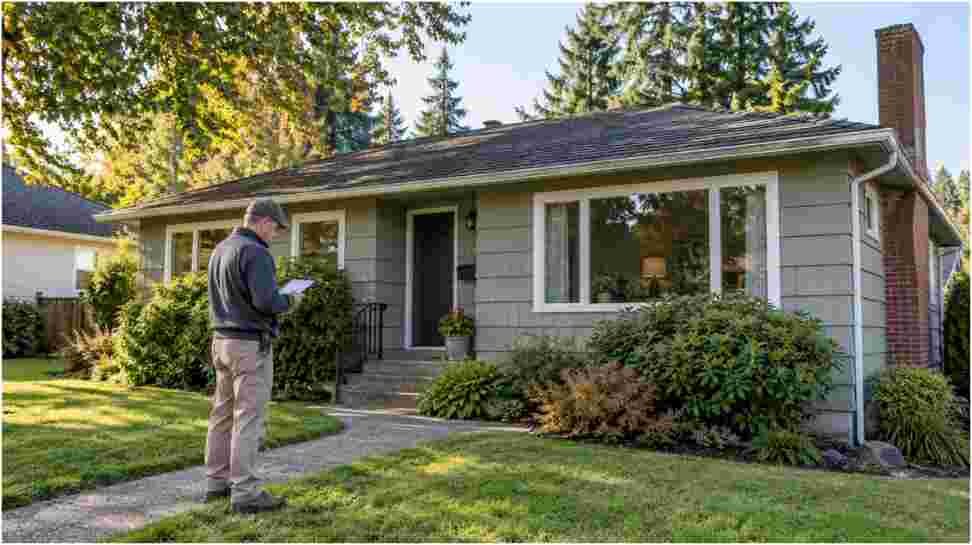
Asbestos never stopped being used in one clean moment, and anyone who tells you otherwise is selling a simpler story than the record supports. The answer to when did asbestos stop being used depends entirely on which country, which product category, and which building material you are asking about, because the phase out happened in staggered waves across four decades.
In the United States, major commercial use collapsed during the 1970s and 1980s under regulatory pressure and litigation, yet a narrow set of products remained legal into the 2020s. For property managers checking old inventory and contractors writing scope documents, that gap between public perception and the actual regulatory calendar is where liability lives.
This timeline walks through the dates that matter, separating federal rulemaking from industry practice, and it flags the specific materials, popcorn ceiling texture among them, where the cutoff line sits far later than most people assume.
When Did Asbestos Stop Being Used in the United States
The United States never imposed a blanket ban during the twentieth century. The Environmental Protection Agency tried in 1989, issuing a rule under the Toxic Substances Control Act that would have phased out most asbestos containing products, but the Fifth Circuit Court of Appeals vacated most of that rule in 1991 in Corrosion Proof Fittings v. EPA.
That decision reset the clock and explains why the honest answer to when did asbestos stop being used in the U.S. is a patchwork rather than a date. The EPA’s own summary of federal bans lays out the categories that were prohibited, including corrugated paper, rollboard, commercial paper, specialty paper, and flooring felt, along with all new uses after 1989.
What actually killed most domestic consumption was not regulation but the market. Insurance carriers began excluding asbestos exposure, plaintiffs’ firms built a litigation engine that pushed dozens of manufacturers into bankruptcy, and by the late 1980s the economics of putting asbestos into a consumer product had turned poisonous.
Spray applied fireproofing and insulation were voluntarily withdrawn from the market in the early 1970s after the National Emissions Standards for Hazardous Air Pollutants under the Clean Air Act took effect in 1971 and gave the EPA authority over asbestos emissions. Those are the practical markers for when did asbestos stop being used in construction assemblies at scale: spray fireproofing gone by the mid 1970s, thermal system insulation largely phased out through the 1970s, and flooring and ceiling products trailing behind into the 1980s.
The final chapter arrived in March 2024, when the EPA published a rule under the amended Toxic Substances Control Act prohibiting ongoing uses of chrysotile asbestos, the only fiber form still imported into the country. That rule targets six conditions of use, including sheet gaskets, brake linings, and aftermarket automotive parts, with compliance deadlines stretching to 2029 for some applications.
So if the question is when did asbestos stop being used as a legal imported commodity in America, the truthful answer is 2024 on paper, with the last imported stock working its way through supply chains this decade.
When Did Asbestos Stop Being Used in Canada
Canada’s record is stranger than most, because the country was a major exporter while slowly restricting domestic use. The question of when did asbestos stop being used in Canada splits into three separate answers: mining, manufacturing, and installation.
The last Canadian asbestos mine, the Jeffrey Mine in Quebec, closed in 2012, and the federal government banned asbestos containing products in 2018 under the Prohibition of Asbestos and Products Containing Asbestos Regulations, which took effect on December 30 of that year.
That regulation prohibited the import, sale, and use of most asbestos products, with limited exclusions for certain military and nuclear applications, and it also set a timeline for phasing out the installation of asbestos containing materials in federal buildings.
Here is the wrinkle that catches building owners. The 2018 ban governs new products entering commerce, not the material already sitting in a 1968 school or a 1974 apartment block. Health Canada maintains guidance on asbestos health risks that makes the distinction between friable and non friable material clear, and provincial occupational health rules still require assessment before renovation in every jurisdiction.
When did asbestos stop being used in Canada in practical building terms is therefore the same answer as in the U.S.: the late 1970s for high risk friable applications, the 1980s for most manufactured goods, and 2018 for legal import and sale.
When Did Asbestos Stop Being Used in Homes

Residential construction is where the general public’s assumptions drift furthest from the record. When considering state-level regulations and asking when was asbestos banned in California, the answer depends heavily on the specific building component and regulatory milestone. When did asbestos stop being used in homes built in North America depends on the component. Roofing shingles and cement siding were still manufactured with asbestos into the 1980s, and some imported cement products carried it later than that. Vinyl floor tiles and the black mastic underneath them routinely contained asbestos through the 1970s and into the early 1980s.
Attic insulation in vermiculite form, particularly material originating from the Libby, Montana mine, was sold under the Zonolite brand until the early 1990s, which means a house built in 1988 can legitimately contain asbestos insulation even though the era is often described as post asbestos.
For anyone asking when did asbestos stop being used in houses as a blanket question, the defensible operating rule is that pre 1980 homes should be presumed to contain asbestos until sampling says otherwise, and homes built between 1980 and 1990 carry meaningful risk in specific components.
Homes built after 1990 are far less likely to contain the material, but “far less likely” is a phrase that survives right up until a contractor pulls a 1994 ceiling panel loose and finds fiber board behind it. The OSHA asbestos standards apply to renovation and demolition work regardless of the building’s construction date, and the burden falls on the employer to determine exposure before disturbing material.
When Did Asbestos Stop Being Used in Popcorn Ceilings
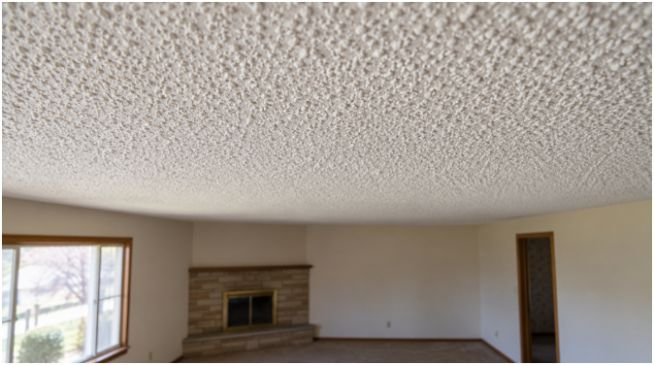
Popcorn ceilings, technically known as acoustic spray texture, are the single most misunderstood asbestos product in residential work. When did asbestos stop being used in popcorn ceilings is a question with a relatively firm answer: most asbestos containing texture compounds were off the market by the late 1970s, but the material was sold in inventory and applied in some regions into the early 1980s.
The fibers were added to give the texture strength and fire resistance, and the percentage by weight in these products was often low, sometimes in the one to ten percent range, which does not make the material safe to sand or scrape without controls.
Homeowners often ask, do all popcorn ceilings have asbestos? The practical problem is that a popcorn ceiling installed in 1977 and a popcorn ceiling installed in 1983 can look identical. Visual inspection cannot settle it. Lab testing on a small sample taken with proper precautions is the only reliable method, and the cost of a test runs far below the cost of an improper removal.
While homeowners often wonder is asbestos flammable—noting that its exceptional fire resistance is precisely why builders used it so widely—it poses severe airborne health hazards when disturbed. If you are scoping a renovation where a texture ceiling is present in a pre 1985 building, budget for testing before demolition begins. That single decision protects both the occupants and the contractor’s insurance position, and it belongs in the scope document long before anyone touches a scraper.
Why the Dates Vary: Regulation, Litigation, and Inventory
Under modern regulatory frameworks like OSHA, asbestos is divided into four classes depending on the activity and material risk, but historically, phaseouts were far less clean-cut. Three forces explain why there is no single year for when did asbestos stop being used across the industrialized world.
Regulation set the outer boundary, but it moved region by region and material by material. Litigation, driven heavily by the U.S. insurance and manufacturing industries, shifted corporate behavior years before formal rules arrived. And inventory effects meant that a product manufactured in 1978 could sit in a warehouse and be installed in 1984, pushing real world installation dates well past the manufacturing cutoff.
Here is a comparison of the key milestones across jurisdictions and product categories, which is the quickest way to sort out a specific building question.
| Jurisdiction or Product | Key Date | What Changed
|
|---|---|---|
| United States, spray applied fireproofing | Early 1970s | Voluntary withdrawal after Clean Air Act authority and public pressure |
| United States, EPA TSCA ban attempt | 1989 (vacated 1991) | Rule issued then largely struck down in Corrosion Proof Fittings v. EPA |
| United States, chrysotile ongoing uses | 2024 | Final TSCA rule banning remaining uses, deadlines to 2029 |
| Canada, domestic product ban | 2018, effective Dec 30 | Prohibition on import, sale, and use of most products |
| Canada, last mine closure | 2012 | Jeffrey Mine in Quebec closed |
| Popcorn ceiling texture | Late 1970s to early 1980s | Asbestos additions largely discontinued, some stock sold later |
| Vermiculite attic insulation | Early 1990s | Zonolite brand production ended |
When Did Asbestos Stop Being Used in Homes and Buildings Outside North America

The global picture diverges sharply, and procurement teams sourcing overseas need the scorecard. The European Union banned asbestos across member states through Directive 1999/77/EC, with a compliance deadline of January 1, 2005, making the EU one of the cleanest regulatory examples.
Australia banned it nationally on December 31, 2003. Japan prohibited most uses in 2006 after a scandal over exposure in manufacturing plants. Meanwhile, the World Health Organization maintains that more than 50 countries still have not banned asbestos, and major producers including Russia and Brazil continue to export chrysotile to markets in Asia and the Middle East.
That means an imported product sitting in a Canadian or American warehouse in 2025 may still contain asbestos if it came from a jurisdiction without a ban, and the 2024 U.S. rule explicitly targets ongoing imports for this reason. When did asbestos stop being used in homes in North America is a question that must be paired with a question about where the components were made, not just when the building was assembled.
From Paper Trail to Compliance Practice
The regulatory timeline matters most when it changes how a business documents a job. Every pre 1990 renovation, demolition, or maintenance task on a commercial property should be treated as a potential asbestos exposure event until sampling and clearance documentation exist, and that documentation is now the primary defense in a liability claim. Insurance carriers reviewing contractor files want to see a written hazard assessment, lab results with chain of custody, and a clearance report from an accredited inspector. A policy that simply asserts the building is post 1985 is worth nothing in a claim.
Compliance workflows around this material have drifted toward software over the last decade because the paper trails were getting lost between subcontractors. A certified industrial hygienist signs the report, but the report has to survive three handoffs and a change order to be useful. Building owners are increasingly requiring a digital record of every asbestos inspection tied to specific rooms and specific renovation dates, so that when a future tenant or buyer asks what is in the wall, the answer exists as a document rather than a shrug and a memory.
The surprising second life of this timeline is that the operational burden has not gone away: it has simply shifted from banning a product to proving what happened in a building before, during, and after a renovation. Contractors who treat the question of when did asbestos stop being used as a settled historical matter are the ones whose files get thin at the worst possible moment, and the firms that keep asking it job by job are the ones who keep their insurance and their reputation. The next regulatory wave, likely a broader TSCA rule covering legacy products, will make the paper trail more valuable rather than less.