

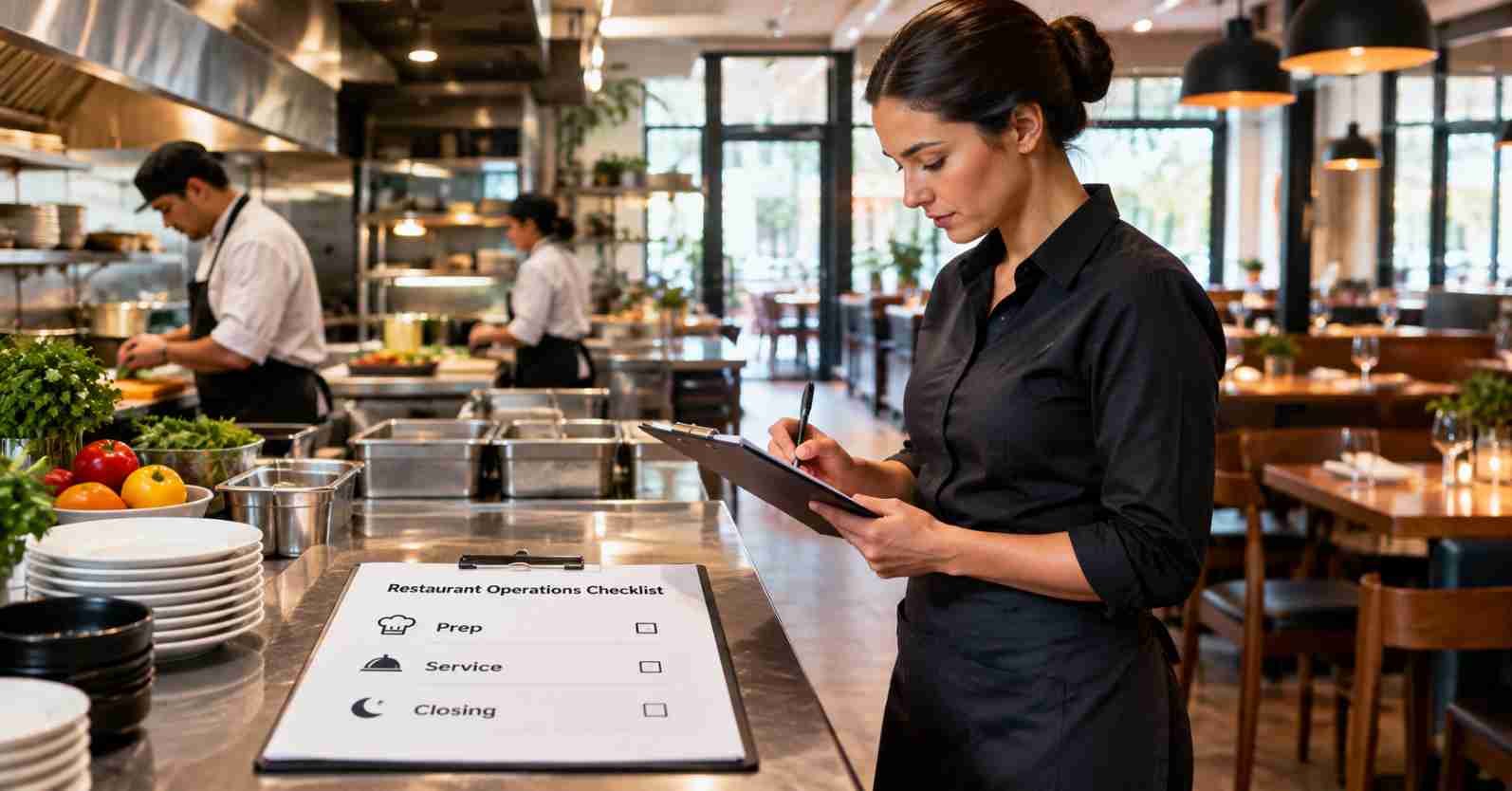
Running a successful dining establishment requires constant attention to detail, strong team coordination, and rigorous procedural consistency. When front-of-house staff and back-of-house kitchen teams work from a unified playbook, overall efficiency improves, service speeds up, and guest satisfaction stays consistently high. Establishing clear daily routines ensures that no small detail falls through the cracks during peak service hours.
Morning Preparation Routines
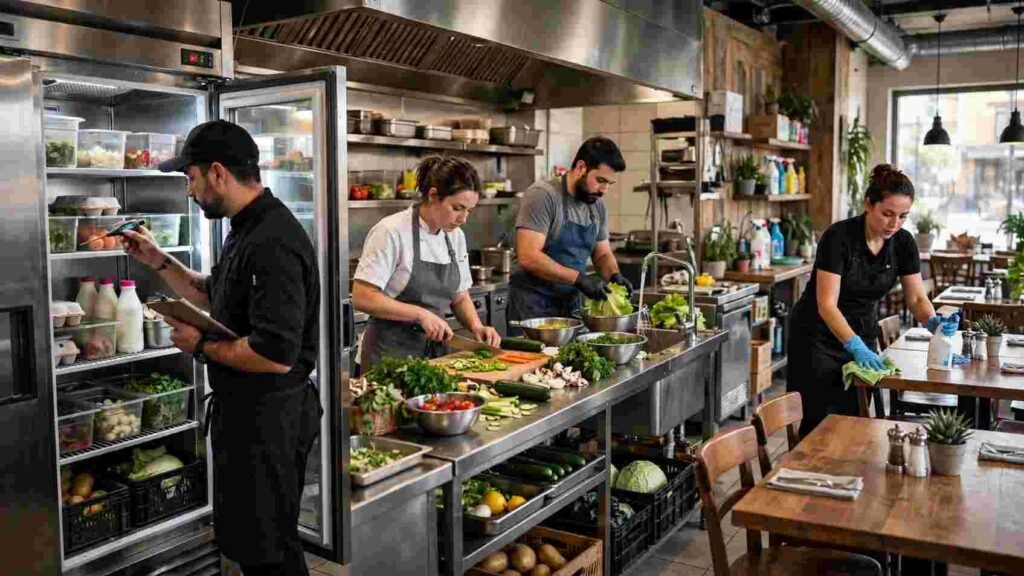
The success of any dinner service begins hours before the first guest walks through the door. Morning preparation lays the groundwork for seamless operations, allowing cooks and floor staff to execute their responsibilities without unnecessary stress or delay.
Kitchen Setup and Inventory Inspection
Early morning kitchen staff must start by inspecting line refrigeration units to verify proper operating temperatures. Cold storage units should hold food at safe thresholds to prevent spoilage and maintain health standard compliance. Once temperatures are logged, prep cooks need to review the daily prep list, cross-referencing existing station stock against projected demand for the day.
Effective food service operations depend on careful inventory management, streamlined preparation, and consistent quality control, regardless of the size of the establishment. For additional insights into planning and managing a compact food business, review these key factors for starting and operating a food kiosk to understand the practical considerations involved in running an efficient food service operation.
Effective kitchen management depends on careful inventory planning, efficient preparation schedules, and consistent quality control. For additional insights into food business management, review these baking business tips for bakeshop owners to understand practical strategies for streamlining operations and supporting long-term profitability.
Vegetable washing, chopping, meat fabrication, and sauce production should be prioritized based on execution times. Long-simmering bases ought to go on the cooktop first, followed by quicker prep items. Staff must also inspect dry storage and receiving areas to prepare for incoming vendor deliveries, ensuring new inventory is rotated properly using the first-in, first-out method.
Front of House Sanitation and Readiness
While the kitchen prepares ingredients, front-of-house team members focus on preparing the dining room for guest arrival. Morning tasks involve wiping down table bases, cleaning booth cushions, and vacuuming floor surfaces. Table settings require meticulous inspection to guarantee that glassware, silverware, and salt and pepper shakers are thoroughly sanitized and properly filled.
Maintaining a polished dining environment and delivering attentive service are essential to creating a memorable guest experience. For an example of upscale dining and hospitality, take a closer look at fine dining in Lansing, Michigan and the experience associated with a refined restaurant setting.
POS terminals should be booted up, cash drawers balanced, and daily menu specials updated across digital devices. Staff must check restrooms for cleanliness, ensuring soap dispensers, paper towels, and toilet paper are fully stocked before opening hours arrive.
Managing Mid-Shift Workflow
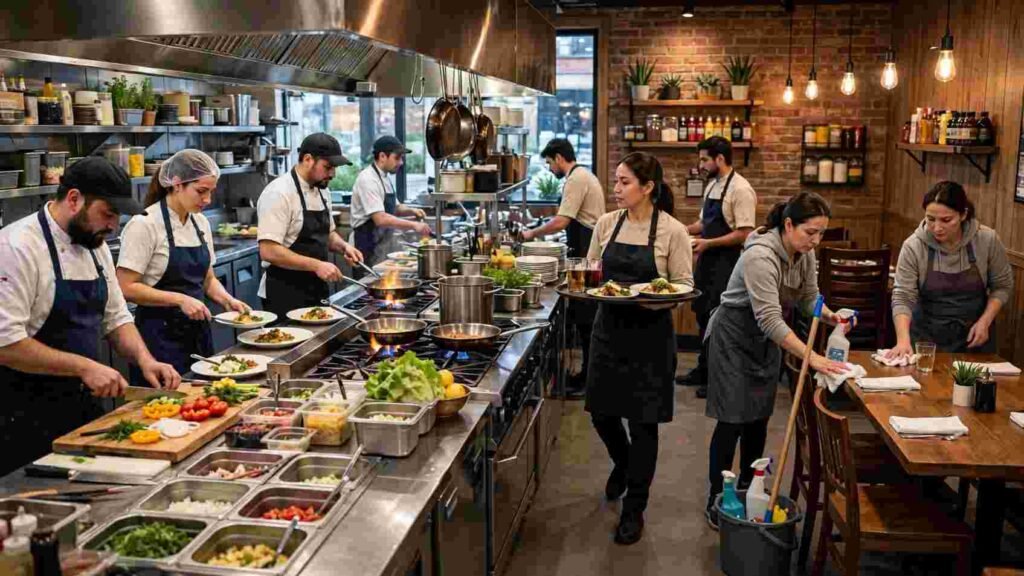
Peak service times demand clear communication, strict adherence to timing, and adaptable labor management to handle unexpected surges in guest traffic.
Expediting and Order Coordination
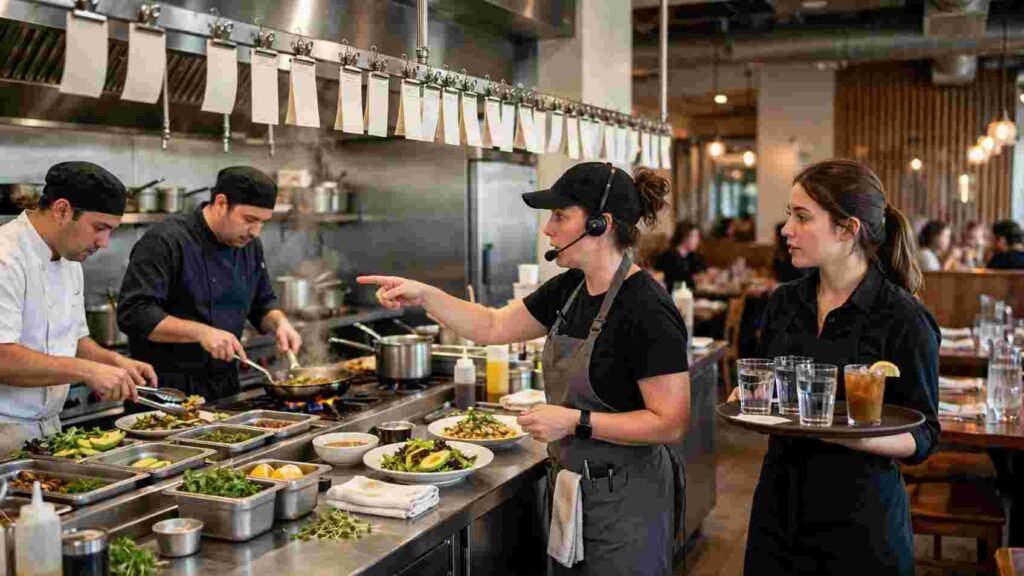
The expeditor plays a pivotal role in bridging the gap between front-of-house order takers and back-of-house cooks. Clear ticket organization, either on physical paper rails or digital display screens, keeps food preparation synchronized. The expeditor monitors cook times, verifies that menu modifications are accurately fulfilled, and ensures complete tables are served simultaneously.
To maintain food quality, hot dishes must be dispatched immediately under heating lamps, while cold dishes leave refrigeration units right before pickup. Regular communication between the expeditor and floor managers prevents table bottlenecks and keeps kitchen ticket times steady.
Staff Synchronization and Break Management
Managing employee energy and maintaining focus throughout a long shift requires balanced scheduling. Shift leads must schedule employee meal breaks during transitional lulls rather than during predictable dining rushes. Floor managers ought to monitor section balances, reassigning servers or assigning assistant staff to assist busier tables when necessary.
Clear communication regarding table turnover rates helps seating hosts manage waitlist expectations accurately, which reduces entrance crowd friction and keeps incoming diners content.
Shift Handovers and Continuous Quality Control
Mid-day transition periods present a prime opportunity to refresh stations, restock depleted items, and communicate important shift developments.
Restocking and Station Resetting
Between lunch and dinner hours, kitchen stations require a comprehensive refresh. Line cooks should replenish squeeze bottles, re-top garnishes, and replace sanitizing buckets with fresh cleaning solutions. Any prep items running low must be flagged to the incoming kitchen shift lead, so emergency prep can begin right away.
Front-of-house staff members wipe down high-touch surfaces, restock service stations with polished cutlery, and polish extra glassware to prepare for the dinner rush.
Managerial Handovers and Communication Logs
A structured handover between outgoing and incoming managers prevents crucial operational details from being lost. Shift logs should record daily total sales, labor percentage metrics, customer feedback, maintenance issues, and inventory variances.
Brief pre-shift huddle meetings with incoming staff members serve to highlight evening menu specials, review target service goals, and address any operational updates.
Comprehensive Closing Procedures
A structured closing routine protects facility assets, secures perishable inventory, and sets up the morning crew for immediate success.
Kitchen Sanitation and Food Storage
At the conclusion of service, line cooks must consolidate leftover prep into clean containers, label each item with precise dates, and move perishables into walk-in refrigeration units. Cooking surfaces, griddles, fryers, and ranges need thorough degreasing and cleaning.
Exhaust hood filters should be checked, floor drains flushed with boiling hot water and cleaning agents, and food prep counters scrubbed with approved surface sanitizer. All waste receptacles must be emptied, sanitized, and relined to maintain pest control services in Northglenn standards across all food handling areas.
Financial Audits and Facility Security
Front-of-house closing routines focus on financial reconciliation and securing the physical building. Cash drawers are audited against POS transaction reports to verify accuracy, with tips distributed according to house policy. Daily financial records are securely uploaded or filed for bookkeeping review.
All exterior doors, emergency exits, and storage units must be locked firmly. Heating, ventilation, and air conditioning systems are set to night mode, interior lighting is adjusted to security levels, and alarm systems are armed before the final staff member leaves the premises.