


Your at-home oral care routine is the single biggest factor in whether you walk out of your next dental appointment with a clean bill of health or a list of follow-up procedures. Brushing makes up the foundation of that routine, and a good electric toothbrush can genuinely change how clean your teeth feel every single day.
If you’ve been on the fence about upgrading from a manual brush, 2026 is a great time to make the switch. The market has matured, prices have dropped, and the technology is genuinely impressive across every price tier.
To get the most out of whatever brush you choose, pairing good hardware with consistent professional care matters too. Readers in Manitoba, for example, have found that booking regular cleanings through a selkirk dentist keeps their gum health on track between home brushing sessions. The two habits work together, and neither replaces the other.
The six brands below were selected based on cleaning performance, ease of use, battery life, replacement head availability, and overall value. You won’t find fluff rankings here, just honest breakdowns of what each brand does well and where it falls short.
1. Oral-B (iO Series)
Oral-B has dominated dentist recommendation lists for years, and its iO Series lineup is the reason why. The oscillating-rotating head technology sets it apart from sonic competitors. Instead of vibrating side-to-side like most brushes, the round head spins and pulsates, wrapping around each tooth and breaking up plaque at the gumline.
The iO Series 2 sits at the accessible end of the range and packs in the two features dental professionals care most about: a two-minute timer and a pressure sensor that alerts you if you’re brushing too hard. The flagship iO Series 10 goes further, adding AI-guided position detection that tracks where in your mouth you are and coaches you in real time through a companion app.
Best for: People who want dentist-recommended cleaning performance, collaborative dental care and are comfortable with a companion app.
Price range: $50 to $260 depending on the series tier.
Heads available: Cross Action, Sensitive, Whitening, and more.
Explore the Oral-B iO Series lineup
2. Philips Sonicare (DiamondClean and 7100 Series)
Philips Sonicare is the other dominant force in electric toothbrushes, and its approach is fundamentally different from Oral-B. Sonicare brushes use sonic vibration, typically a high-frequency side-to-side motion, to drive toothpaste and saliva between teeth and along the gumline. Many users find the sensation gentler, which makes Sonicare a strong choice for people with sensitive teeth or gum recession.
The Sonicare 7100 is a standout mid-range option. It runs through multiple cleaning modes including Clean, White+, and Gum Health, and the pressure sensor lights up red the moment you push too firmly. Battery life is genuinely long at up to two weeks per charge. The Prestige 9900 is the premium tier, with a sleek charging case and an AI-powered SenseIQ system that adapts brushing intensity automatically.
Best for: Sensitive gums, people who want a quieter brush, and anyone upgrading from a lower-end model who wants noticeable feel differences.
Price range: $60 to $330.
See all Philips Sonicare models
3. Burst
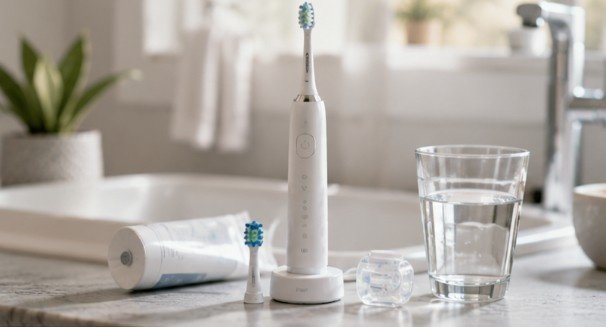
Burst broke into the mainstream by offering subscription-based replacement heads at a fraction of the cost you’d pay for Oral-B or Sonicare refills. The handle itself is competitively priced, and the subscription model means you’ll actually replace brush heads on schedule rather than stretching a worn-out head for months too long.
It’s a sonic brush that claims roughly 33,000 vibrations per minute, and it includes charcoal-infused soft bristles and a built-in pressure sensor. Burst earned a strong reputation in Consumer Reports’ testing, landing coverage as the top subscription-based electric toothbrush of the year. The cleaning feel is solid, and the four-week battery life means you’re not charging constantly.
The trade-off is that Burst’s bold performance claims, things like “10x more plaque removal,” are manufacturer figures measured against manual brushing rather than against rival electric brushes. Take those numbers with appropriate skepticism. The real selling point is running cost: replacement heads come in significantly cheaper than name-brand alternatives bought individually.
Best for: Budget-conscious buyers who want solid performance without recurring high costs.
Price range: Handle from $70; subscription heads around $6 each.
Check out Burst Oral Care
4. SURI
SURI entered the market as a sustainability-first alternative to the big two, and it’s earned serious respect from reviewers who care about build quality and environmental footprint. The handle is made from metal rather than plastic, giving it a premium weight and feel that distinguishes it from practically every competitor in its price class.
Consistent daily oral hygiene matters just as much as technology. Cleaning performance matches Sonicare and Oral-B equivalents at a similar price point, and the brush holds a charge long enough that you won’t need to bring a charger on short trips. SURI’s head replacement program is also designed with reduced plastic waste in mind, which is a genuinely uncommon commitment in this product category.
The sonic motor delivers consistent results, and multiple reviewers across independent testing sites have noted that the cleaning results hold up against brushes from far more established brands. If you want a brush that looks good on your bathroom shelf, charges over USB-C, and doesn’t feel like a compromise, SURI deserves serious consideration.
Best for: Eco-conscious buyers who want premium build quality without the premium markup.
Price range: Around $79 to $95.
Learn more about SURI
5. Oral-B Pro 1000
It might feel strange to list Oral-B twice, but the Pro 1000 occupies a category all its own. It’s one of the most reviewed electric toothbrushes ever sold, with tens of thousands of verified purchaser ratings that have stayed consistently strong across years of sales.
This isn’t a fancy brush. There’s no app, no position detection, and no multiple cleaning modes. What you get is a reliable oscillating-rotating head, a two-minute timer, and a pressure sensor, all wrapped in a proven design that dental hygienists have recommended to patients for over a decade.
If someone in your household is trying an electric toothbrush for the first time and you don’t want to spend $150 on something they might leave unused in a drawer, the Pro 1000 is the risk-free starting point. It cleans well. It’s simple. And the replacement heads are widely available at almost every pharmacy and grocery store that carries oral care products.
Best for: First-time electric toothbrush users, kids transitioning from manual brushes, or anyone who wants straightforward function over features.
Price range: $40 to $55.
6. Bitvae R2
The Bitvae R2 is the budget breakthrough worth knowing about in 2026. At a retail price between $25 and $40, it includes eight brush heads in the box, a 30-day battery life, and a rotating head design that independent testers have found outperforms manual brushing by a significant margin. For a first electric toothbrush or a travel backup, the value-to-performance ratio is hard to argue with.
It won’t replace the smart features of an iO Series 10 or the refined feel of a Sonicare Prestige. But the Bitvae R2 doesn’t pretend to. It’s a straightforward rotating brush that does the job it promises. The included brush heads alone would cost more than the full purchase price if bought separately from a premium brand, which tells you a lot about where Bitvae is positioning itself in the market.
Best for: Budget shoppers, backup travel brushes, and families who need multiple brushes without a large upfront spend.
Price range: $25 to $40.
Visit Bitvae
How to Pick the Right One for Your Mouth
The best electric toothbrush for you depends on a few practical factors, not just brand reputation. Here’s a quick comparison table to help you match your priorities to the right pick:
| Brand / Model | Brush Type | Best Feature | Price Range | Best For
|
|---|---|---|---|---|
| Oral-B iO Series 2 | Oscillating-Rotating | Pressure sensor + timer | $50 to $80 | Everyday performance, dentist-recommended |
| Philips Sonicare 7100 | Sonic | Gentle on sensitive gums | $60 to $120 | Sensitive teeth and gum health |
| Burst | Sonic | Low-cost head subscription | $70 + subscription | Long-term savings on head replacements |
| SURI 2.0 | Sonic | Metal handle, USB-C, eco-friendly | $79 to $95 | Design-conscious, eco-aware buyers |
| Oral-B Pro 1000 | Oscillating-Rotating | Simple, proven, widely available | $40 to $55 | First-time users, no-fuss brushing |
| Bitvae R2 | Rotating | 8 heads included, 30-day battery | $25 to $40 | Budget pick, best value per dollar |
A few things worth checking before you buy: confirm the replacement heads are easy to find in your area or online, look for a built-in pressure sensor if you tend to brush aggressively, and check whether the charging standard (USB-C vs. proprietary dock) fits your travel habits. If you wear braces or have permanent retainers, some brands sell specialized orthodontic heads that make a real difference.
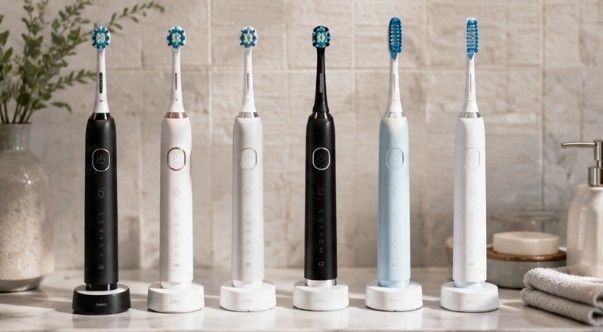
One Thing No Brush Can Replace
Every brand on this list will meaningfully reduce plaque compared to a manual toothbrush. But here’s what most product reviews skip: your electric toothbrush is a between-visit maintenance tool. It keeps buildup from accumulating, but it can’t remove calcified tartar once it’s formed below the gumline, and it can’t spot early signs of decay, cracking, or gum disease the way a trained professional can.
Twice-yearly cleanings and checkups remain the standard recommendation from dental associations in both the US and Canada. Your brush handles the daily work. Your dentist handles what the brush can’t reach, can’t see, and can’t treat. Professional tartar cleaning supports better long-term oral health.
A good electric toothbrush is one of the smartest investments you can make in your oral health. Pick one from the list above that fits your budget and your brushing habits, use it consistently, and keep those professional appointments on the calendar.