

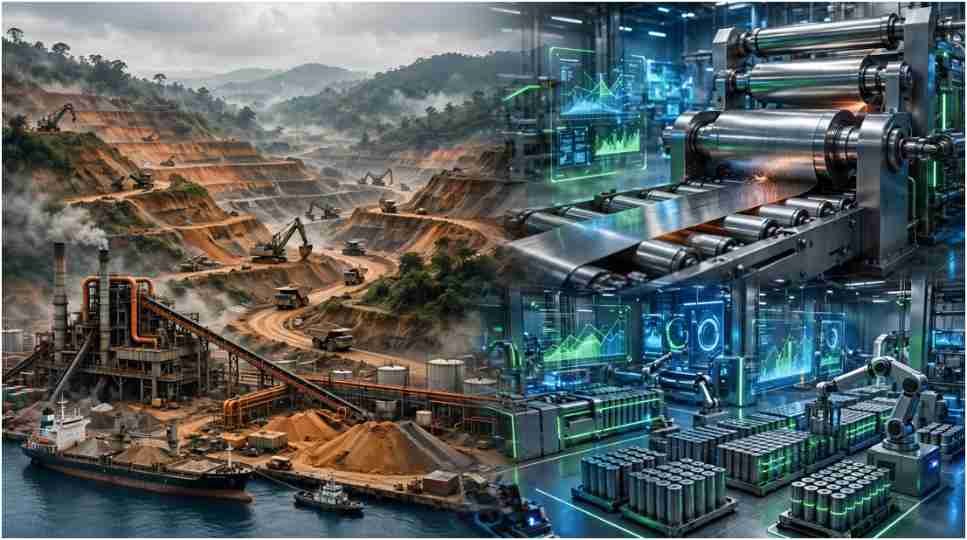
Nickel has a compelling clean-energy story, but supply is growing faster than many headlines admit. When I assess FintechZoom.com Nickel, I treat its price display as the opening clue—not the complete market argument.
The real outlook depends on three forces: Indonesian production, stainless-steel demand and competition between EV battery chemistries. Together, they create a market that can rally suddenly while remaining structurally oversupplied.
The Nickel Market Is Sending Mixed Signals
Nickel prices moved around the mid-$16,000 to low-$17,000-per-tonne area during parts of 2026. That range can change quickly, so it needs a date and contract whenever published.
A price rally does not automatically prove that demand is booming. Nickel can rise because Indonesia delays mining approvals, traders cover short positions or exchange inventories decline. It can then retreat when new production reaches the market.
That pattern explains why FintechZoom.com Nickel should be read beside supply-and-demand data. The quote shows what the market is doing. It does not fully explain why.
Quick Nickel Market Snapshot
| Market factor | Current signal | Likely price effect |
|---|---|---|
| Indonesian output | Historically dominant and expanding | Limits sustained rallies |
| Production restrictions | Can tighten ore availability | Creates short-term spikes |
| Stainless-steel demand | Largest end-use market | Establishes baseline demand |
| Nickel-rich EV batteries | Long-term growth opportunity | Supports selected nickel classes |
| LFP batteries | Use no nickel | Reduces battery-demand expectations |
| Market balance | Continued surplus expected | Bearish without meaningful cuts |
This is not a simple bull-versus-bear contest. It is a timing problem. Supply shocks affect prices immediately, while changes in mines, smelters and battery technology reshape the market over several years.
Indonesia Controls the Supply Story
Indonesia’s influence is difficult to overstate. The U.S. Geological Survey estimates that the country accounted for 62% of global mined nickel production in 2024.
Newer International Nickel Study Group estimates place Indonesia’s 2025 share even higher. Different percentages can both be valid when they use different years or distinguish mined nickel from refined primary nickel.
Writers often combine those categories. I keep them separate because ore production, processing capacity and battery-grade supply are not interchangeable.
Why Production Quotas Move Prices
Indonesia uses mining-work-plan approvals, known as RKABs, to regulate permitted ore output. Approval delays or lower quotas can restrict feedstock available to domestic smelters.
Markets react quickly because many processing facilities depend on Indonesian ore. Even the possibility of tighter supply can trigger buying and short covering.
That sensitivity helps explain sudden movements reported through FintechZoom.com Nickel. Yet a quota headline should not be confused with a confirmed fall in finished nickel production.
Why Supply Cuts May Not End the Glut
The International Nickel Study Group estimated 2025 primary production at 3.81 million tonnes and usage at 3.60 million tonnes.
The difference is a 210,000-tonne surplus when calculated from the rounded figures. INSG’s more precise published estimate is 209,000 tonnes.
That worked example is important. Demand can grow while a market remains oversupplied. Production only needs to grow faster.
INSG projected a larger surplus of 261,000 tonnes for 2026. Therefore, a short-term rally needs sustained production restraint or stronger consumption to become a lasting structural recovery.
Stainless Steel Still Sets the Baseline
Battery technology attracts attention, but stainless steel remains nickel’s central demand engine. INSG places its share at just under 70% of global primary nickel use.
Stainless steel links nickel to construction, transportation, machinery, appliances and industrial equipment. Weak manufacturing can therefore pressure nickel even when electric-vehicle sales rise.
This creates the first speed in my market framework. Stainless steel supplies the large, mature demand base. Its growth usually moves with industrial activity rather than technology hype.
A strong nickel outlook must explain steel demand. A forecast built only around EVs ignores most current consumption.
EV Battery Demand Has a Chemistry Problem
Nickel can increase a battery cathode’s energy density. That makes nickel-rich chemistries attractive for vehicles requiring longer range or stronger performance.
However, lithium-iron-phosphate batteries contain no nickel. Their lower material cost and improving performance have helped them gain market share.
The battery story is therefore conditional. More EVs do not guarantee proportional growth in nickel use. The result depends on which battery packs automakers install.
This is the second speed in my framework. Battery demand can grow faster than traditional uses, but chemistry choices make it less predictable. FintechZoom.com Nickel coverage should present both possibilities rather than treating EV expansion as an automatic bullish signal.
What Nickel Means for US Investors
US investors cannot usually buy and store nickel as easily as a familiar retail asset. Available exposure may include mining shares, diversified metals funds, commodity-linked products or futures.
Each vehicle introduces a different risk. A mining company can underperform nickel because of rising costs, debt, taxes, operational failures or exposure to other metals.
Mining Stocks Are Not Pure Nickel Bets
Vale, BHP and other diversified miners may provide indirect exposure. Their share prices also respond to iron ore, copper, currency changes and company-specific decisions.
The same warning applies to broad industrial-metals funds. Diversification can reduce single-metal risk, but it also weakens the connection between fund performance and nickel prices.
Before investing, I check revenue exposure rather than relying on a company’s appearance in a nickel article.
Futures Can Magnify Losses
Nickel derivatives introduce leverage, margin requirements and contract complexity. The Commodity Futures Trading Commission warns that commodity futures are volatile and rarely suitable for retail investors. Losses can exceed the initial amount committed.
FintechZoom.com Nickel does not execute nickel trades. Its market information should never be mistaken for a recommendation or regulated brokerage service to FintechZoom Pro.
My Two-Speed Nickel Outlook
My short-term outlook is neutral and volatility-heavy. Indonesian policy can create sharp rallies, but inventories and expanding production may limit their duration.
My longer-term outlook is cautiously constructive, not automatically bullish. Stainless steel should preserve a substantial demand floor. Nickel-rich batteries could add growth, particularly in performance-focused vehicles.
The risks are equally clear. LFP adoption may weaken battery demand, while Indonesian capacity can keep the market supplied. Environmental rules, trade policy and processing economics add further uncertainty.
The most useful signal is not the daily quote alone. I watch the market balance, Indonesian output, LME inventories and battery-chemistry share together.
The Metal Has Potential—Lose the Hype
FintechZoom.io or FintechZoom.com Nickel can help readers notice market movements, but the investment case needs harder evidence. Indonesia can tighten supply and spark rallies. It can also expand production enough to preserve a surplus.
For the next practical step, record the displayed price, contract and timestamp. Then compare that snapshot with current production, inventory and demand data. A nickel thesis becomes credible only when price and fundamentals tell the same story.
Frequently Asked Questions
1. What drives FintechZoom.com Nickel price movements?
Indonesian supply decisions, stainless-steel demand, exchange inventories, currencies and battery trends drive prices.
2. Will electric vehicles increase nickel demand?
Some nickel-rich batteries support demand, but growing LFP adoption reduces nickel use in many EVs.
3. Why does Indonesia affect nickel prices?
Indonesia produces most of the world’s mined nickel, giving its policies exceptional market influence.
4. Is nickel a good investment for US investors?
Nickel may offer opportunity, but its volatility and complex exposure methods make independent research essential.